Toptracer Range
- 4.8
- Rating
- 1.00M
- Installs
- Free
- Price

 Analysis by App-foxy
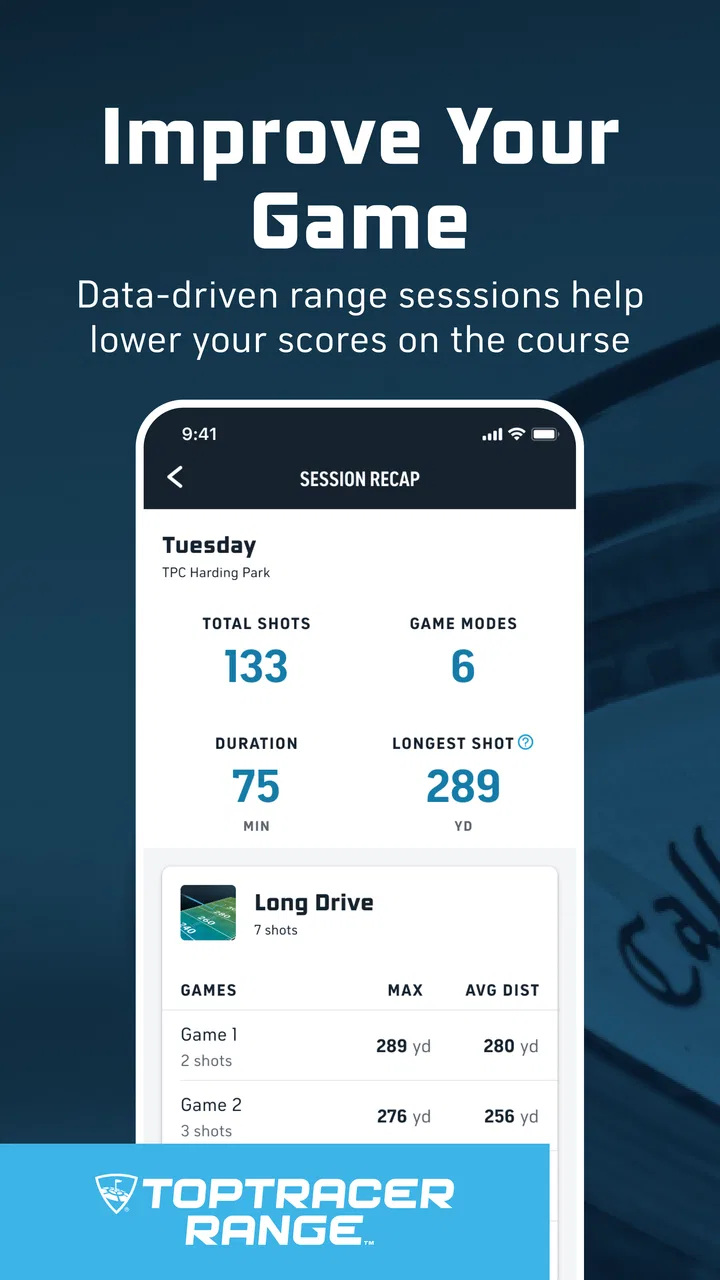
I like golf apps that make practice feel less like guesswork, and Toptracer Range is built around that idea. It connects the shots you hit at participating Toptracer ranges with a phone-based record of your session, giving you ball information, shot tracking, and access to game leaderboards. In my experience, its appeal is not that it replaces a lesson or a launch monitor at home. Its strength is that it makes an ordinary range visit more structured, measurable, and a little more competitive.
This is a free sports app from Toptracer Range, rated for Everyone. It has grown into a widely used option, with more than a million installs and an average score of 4.8 from roughly ten thousand ratings. Those figures suggest that it has found a clear audience, but they do not automatically make it right for every golfer. The important question is whether you regularly visit a range equipped for the service and whether you want your practice to produce useful feedback instead of ending when the last ball lands.
What to decide before installing Toptracer Range
The first decision is practical: this app is tied to Toptracer-equipped ranges. It is not a general-purpose golf scorecard that becomes useful on every course, and it is not simply a swing diary for hitting balls in a backyard. Before planning a session around it, I would check whether the range you use supports Toptracer and how its bays are arranged. The experience depends heavily on that connection.
You May Also Like

 Blood Strike: 2.5 Anniversary
Blood Strike’s Loadouts Turn Every Drop Into a Tactical Gamble
A close look at Blood Strike’s custom loadouts: how fast access to signature weapons reshapes its battle royale rhythm, rewards preparation, and narrows the gap between fights.

 Pandora - Music & Podcasts
Pandora’s Music Is Easy to Start, but Harder to Recover
Pandora’s strength is its low-effort path from a seed to a station. Its weak spot is how much confidence it asks you to place in connection, setup, and quiet recovery.

 8 Ball Pool
 Is Built on Rivalries, Rematches, and Routine
A close look at the rivalries, rematches, shared routines, and unanswered safety questions that turn a quick pool match into a persistent mobile community.

 Samsung Music
’s Quiet Strength Is Playing What You Already Own
Its reach comes less from spectacle than from dependable access to a personal library. That simplicity is both the app’s strongest retention engine and its ceiling.

 AccuWeather: Weather Radar
AccuWeather Review: A Quick, Clear Forecast for Everyday Decisions
For everyday plans, the best forecast is the one you can understand quickly. AccuWeather makes rain timing, radar, and local conditions easy to act on, with a few trade-offs.

 Hill Climb Racing
Why Hill Climb Racing Still Turns Crashes Into One More Run
A tiny car, a bumpy hill and one more upgrade: Hill Climb Racing keeps resurfacing because its simple chaos makes every near-miss feel personal.
More From Our News Desk



The second decision is about the kind of information you actually want. If you only need a place to jot down scores from a round, a conventional golf scorecard app may be simpler. If you want detailed swing diagnosis, an app paired with personal sensors or a dedicated home launch monitor may suit you better. Toptracer Range sits between those choices: it makes range practice more informative without asking you to buy and carry your own tracking hardware.
I would also consider how you practice. A golfer who hits a large bucket without a plan may enjoy seeing shot results, but the information can become noise. The app works best when I give a session a purpose, such as comparing a seven-iron with a hybrid, checking whether a change in setup affects ball flight, or playing a target-based game rather than swinging randomly. The technology is most helpful when it supports a question I already have.
There is a useful social factor too. Leaderboards and range games can make practice easier to share with friends or family members who are not yet serious golfers. That makes the app more approachable than a purely technical training tool. On the other hand, players who dislike competition or prefer a quiet, uninterrupted practice routine may find those elements less important than the tracking itself.
How the first session feels
My advice is to treat the first visit as an orientation rather than a serious practice test. Get the app ready before you arrive, allow time to connect with the range setup, and make sure you understand how your bay identifies your session. Rushing through that part can make the first few shots feel confusing, especially if you are also trying to choose clubs and find a comfortable rhythm.
Once everything is working, I would begin with familiar clubs and ordinary swings. That gives you a baseline before you start experimenting. A common mistake is to hit only unusually hard shots because the numbers are exciting. Those shots may be entertaining, but they are not necessarily representative of the swing you can repeat on the course.
One of the less obvious benefits is that the app can change how you remember a session. Without tracking, I might leave the range thinking that one club felt “good” and another felt “bad,” even though that judgment was based on a few memorable shots. Reviewing the session encourages a more careful distinction between a comfortable feeling, a useful result, and a repeatable pattern.
Using the information without overreacting
Shot data is valuable, but I would not chase every variation. Ball results naturally change with contact, tempo, fatigue, and the quality of the particular swing. A single poor shot does not prove that a club is wrong for you, just as one excellent strike does not prove that a new technique is ready for the course.
A better workflow is to choose one variable at a time. Hit several normal shots with the same club, note the general pattern, then make one small adjustment. If you change your grip, stance, alignment, and swing thought together, the app may show a different outcome, but you will not know which change mattered. Toptracer Range is more useful as a way to test controlled ideas than as a scoreboard for every swing.
I also find it helpful to separate practice goals from entertainment goals. A game or leaderboard can be a good way to keep a session lively, while a focused block of shots can help with technique or club selection. Trying to do both at once may weaken both experiences. I would use the competitive modes early or late in a visit and reserve the middle for deliberate practice.
Where Toptracer Range earns its place
I see this section as a question of routine, not novelty: what makes a range app worth opening again after the first curious session? For me, the answer starts with giving each visit a small purpose and treating the shot record as a prompt for better questions, not a verdict on my swing. That distinction helps explain where Toptracer Range can become a useful part of practice.
It turns a range visit into a repeatable routine
The biggest win is continuity. Instead of treating every bucket of balls as an isolated event, I can use the app to create a simple practice habit: warm up, test a specific club, play a target challenge, and review what happened. That structure is especially useful for golfers who know they should practice but tend to lose focus after the first few swings.
For example, imagine visiting the range after work with a friend. You have limited time and do not want a formal lesson. One person can begin with short irons while the other plays a target game, then you can compare the experience without turning the evening into a technical lecture. The app gives the visit an activity to follow, so the range feels more like an organized outing than a pile of balls to finish.
This is also helpful for families. A new golfer may not care about carry numbers or technical terminology, but a game with visible targets and a leaderboard can provide an immediate reason to keep trying. The app does not make someone a golfer by itself, yet it can lower the barrier to enjoying the first few visits.
It adds context to club decisions
I would not use the app as the sole authority for buying clubs, but it can make a fitting conversation more concrete. If one club repeatedly produces a comfortable, predictable result while another creates a wide spread of outcomes, that difference is worth discussing with a professional. The key word is repeatedly. A range session should inform a decision, not make it for you.
The same approach works when building a practice plan. Rather than saying “I need to improve my irons,” I can identify a narrower issue: perhaps my longer clubs are less consistent, or perhaps I need to learn which swing produces a reliable result when I am not trying to hit the ball as hard as possible. Tracking gives those conversations something more useful than memory alone.
The social layer is more than decoration
Leaderboards can sound like a minor feature, but they change the mood of a session. A golfer who normally gets bored after a few minutes may stay engaged because there is a target to beat. Friendly competition can also make it easier to invite a less experienced player. Instead of comparing real-world scores on a course, everyone can participate in the same range activity.
There is a trade-off: competition encourages focus, but it can also encourage bad decisions. I have seen golfers take unnecessary risks simply because a leaderboard made a safe shot feel less exciting. My recommendation is to use the competitive element as a reason to repeat a shot, not as a reason to abandon sensible technique.
The free price changes the value calculation
Because the app is free, the main cost is not a subscription decision inside the app. The practical cost is the range visit itself and the time needed to learn the workflow. That makes it easy to try without committing to a new piece of equipment. For a golfer who already pays to practice at a supported range, the app can add value to an activity already on the calendar.
The free model is particularly attractive for occasional players. Someone who visits a range only a few times a year may not want a paid coaching platform or personal tracker. Toptracer Range offers a way to make those visits more memorable without requiring a long-term purchase. Frequent players may get even more from it, provided they enjoy reviewing results and setting small goals.
What the current app details mean in practice
The application was released on January 19, 2018, and its current version is 3.45.108. That history matters because this is not a brand-new experiment with an untested concept. It has had time to establish its range-focused identity and attract a substantial user base. At the same time, an established app can still feel more specialized than a general golf companion because its best features make sense only in the right physical setting.
On Android, the listed minimum requirement is version 8.0. That is a useful practical check before a visit, especially if you use an older phone that you keep for occasional trips to the range. I would install and open it at home rather than waiting until I am standing at the bay. A little preparation avoids spending paid practice time troubleshooting a device that has not been updated or tested recently.
Where the usual alternatives fit better
A traditional scorekeeping app is the better choice when your main activity is playing full rounds and recording hole-by-hole results. It follows you onto the course without needing a specialized range, and its purpose is clearer for handicap-minded record keeping. Toptracer Range is stronger before the round, when you are hitting practice shots and want immediate feedback or a game to guide the session.
A personal launch monitor or sensor-based training system may be a better investment for a golfer who practices frequently at home and wants the same tracking environment everywhere. Those products can offer a more portable routine, while this app’s advantage is that the tracking is part of the supported range experience. Choosing between them comes down to where you practice, not simply which interface looks more attractive.
A lesson with a teaching professional remains the better option when you do not know why your ball flight is inconsistent. The app can show what happened to a shot, but numbers alone may not explain the movement causing it. If you are making a major swing change, dealing with pain, or stuck in a long-standing pattern, professional eyes are more valuable than repeatedly chasing better-looking results on a screen.
There is also a simple alternative: hit balls without an app. That can be the right choice when you want to relax, work on feel, or avoid turning every practice session into an evaluation. Not every golfer needs measurement every time. I would skip Toptracer Range on days when the screen would distract me from rhythm and contact.
The friction of switching to a tracked routine
The cost of switching is mostly behavioral. You have to remember the phone, prepare before arriving, connect the session correctly, and look at the results with enough discipline to learn from them. That is not difficult, but it is more involved than taking a bucket and swinging until it is empty.
There is also a mental cost. Once results are visible, some players start judging every shot. That can make practice tense, particularly for beginners who are still learning what a normal strike feels like. I would recommend starting with short sessions and one simple goal. The app should guide attention, not consume it.
Another trade-off is portability. Your history and experience are most useful when you return to a compatible range. If you frequently travel between facilities, the app may be less central to your routine than a tool that works independently of location. For a regular at one supported range, that limitation is minor; for a traveler, it deserves more weight in the decision.
Who should install it
I recommend Toptracer Range to golfers who already enjoy range practice and want a clearer reason for each visit. It is especially appealing if you like friendly competition, want to compare normal shots over time, or are trying to make practice more engaging for a partner or family member. The free price makes experimentation easy, and the Everyone rating keeps it approachable for a broad audience.
I would also suggest it to intermediate players who are ready to move beyond vague impressions. You do not need to be an expert to benefit from tracking. In fact, the most useful stage may be when you are beginning to notice patterns but do not yet have a reliable way to describe them. A record of shots can help you arrive at a lesson or fitting with better questions.
Who should leave it installed but unused
I would not make it a priority for someone who rarely visits a compatible range, wants a full-course scorecard first, or expects an app to diagnose swing mechanics automatically. It is also not the ideal choice for a golfer who strongly prefers offline practice with no screen involved. In those cases, a course-focused app, a personal training device, or a simple notebook may fit the real routine better.
Beginners should avoid treating the app’s feedback as a pass-or-fail test. If you are still learning basic contact, use the information to notice broad tendencies and keep the session enjoyable. Advanced players should likewise remember that range results do not perfectly reproduce pressure, uneven lies, wind, or decision-making on a course. The app can prepare you, but it cannot recreate every part of golf.
My recommendation after weighing the trade-offs
Toptracer Range is worth trying when your range supports it and you want practice to feel purposeful without buying personal tracking hardware. I like the balance: the app adds shot information and competition to a real range visit, but it does not demand that every golfer become a data analyst. Its strongest use is as a bridge between casual hitting and structured practice.
My practical recommendation is to install it before your next visit, test the connection at home, and plan one modest goal for the session. Use ordinary swings first, explore the games afterward, and judge patterns across several visits rather than chasing one impressive number. That approach keeps the app useful instead of letting it take over the experience.
Toptracer Range is not a universal replacement for a scorecard app, a coach, or a personal launch monitor. It does not need to be. For the golfer standing at a supported range with a bucket of balls and no clear plan, it can turn that time into something more focused and enjoyable. I would recommend it to that player without hesitation, while reminding anyone else to choose the tool that matches where and why they practice.
FAQs for Toptracer Range
01What is Toptracer Range and how does it enhance my golfing experience?
Toptracer Range is an advanced golf tracking system that uses cameras and sensors to provide real-time data on every shot you take. It enhances your golfing experience by offering detailed statistics, such as ball speed, launch angle, and distance. This data helps you analyze your performance and improve your skills, making practice sessions more engaging and informative.
02Is Toptracer Range suitable for beginners or only for experienced golfers?
Toptracer Range is designed for golfers of all skill levels. Beginners can benefit from the instant feedback and instructional games, while experienced players can delve into detailed analytics to fine-tune their performance. The app’s user-friendly interface and various modes cater to different skill sets, ensuring a valuable experience for everyone.
03Can I use Toptracer Range without an internet connection?
No, an internet connection is required to use Toptracer Range. The app relies on cloud-based data processing to deliver precise analytics and statistics. This connectivity ensures that you receive up-to-date information and can store your performance data for future analysis and comparison.
04Does Toptracer Range offer any social features to connect with friends?
Yes, Toptracer Range includes social features that allow you to compete with friends or other golfers. You can join leaderboards, participate in challenges, and share your scores on social media platforms. These features make the app not only a tool for improvement but also a platform for social interaction and friendly competition.
05What devices and platforms is Toptracer Range compatible with?
Toptracer Range is compatible with both Android and iOS devices. It supports smartphones and tablets, ensuring a seamless experience across different platforms. The app is regularly updated to maintain compatibility with the latest operating systems, providing a smooth user experience on a wide range of devices.
Pros
- Enhances golfing skills with real-time feedback.
- User-friendly interface suitable for all ages.
- Offers a variety of game modes and challenges.
- Provides detailed swing analysis and statistics.
- Connects with friends for competitive play.
Cons
- Requires a stable internet connection.
- Limited availability at certain golf ranges.
- Some features are behind a paywall.
- Can be overwhelming for beginners.
- May experience occasional data sync issues.

Toptracer Range
Gallery